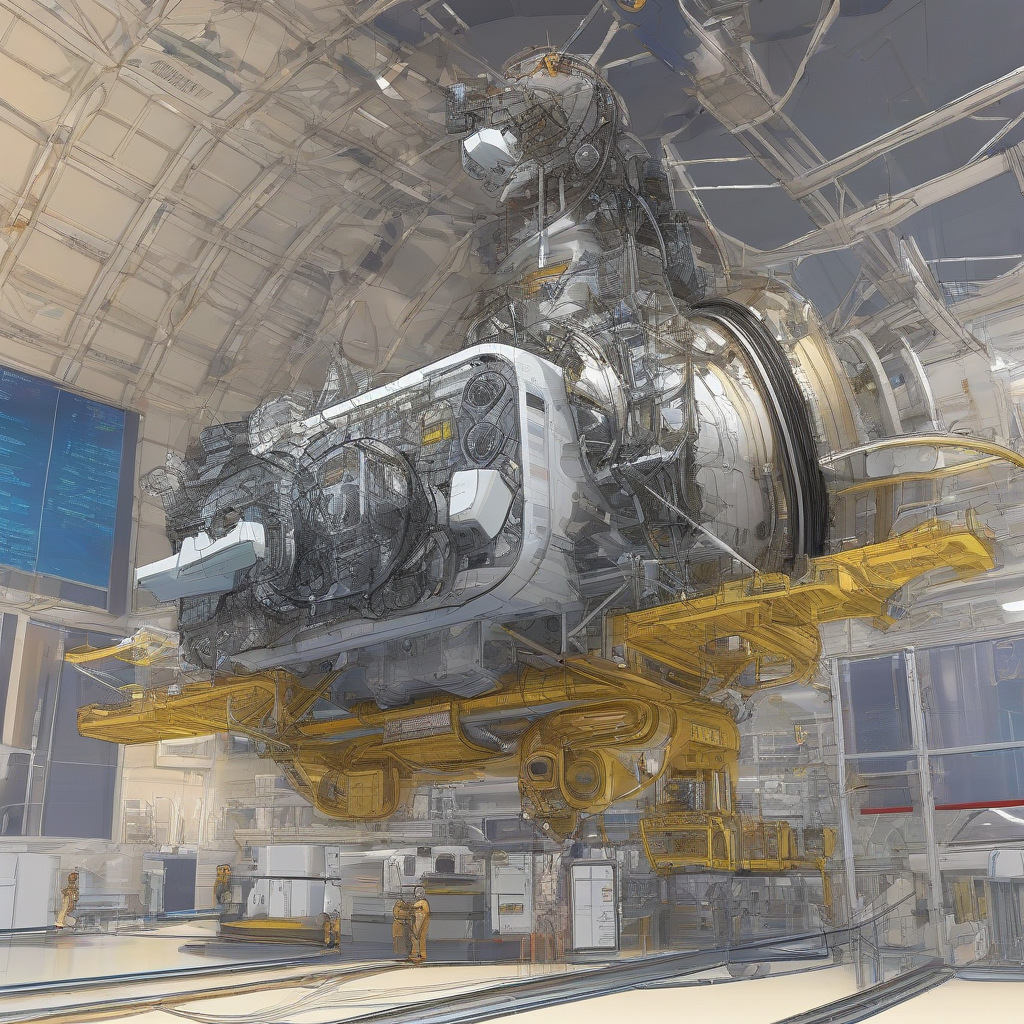
ESA Impact 2025 - October-December
ESA Impact 2025: A Year of Breakthroughs and New Frontiers
As we conclude the final quarter of 2025, the European Space Agency (ESA) has made significant strides in advancing our understanding of the universe, pushing the boundaries of space exploration, and developing innovative technologies. In this comprehensive overview, we'll delve into the key milestones and achievements of the ESA Impact 2025, highlighting the agency's commitment to scientific discovery, technological innovation, and international cooperation.
Exoplanet Tracking and In-Orbit Manufacturing
One of the most exciting developments in the field of exoplanet research is the ESA's Plato mission, which aims to track the brightness of thousands of stars to detect and characterize exoplanets. In the final quarter of 2025, the Plato mission underwent a rigorous test campaign to ensure its readiness for space. This mission will provide valuable insights into the properties of exoplanets, shedding light on the possibility of life beyond our solar system.
Another significant breakthrough in the field of space technology is the successful 3D printing of a metal part in orbit. This achievement marks a major milestone in the development of in-orbit manufacturing, which has the potential to revolutionize the way we produce and repair spacecraft components. The detailed analysis of this metal part will help assess the feasibility of in-orbit manufacturing, paving the way for future applications in space exploration.
Earth Observation and Telecommunications
The ESA has made significant contributions to Earth observation and telecommunications in the final quarter of 2025. The Sentinel-1D, Sentinel-6B, and HydroGNSS satellites have reached orbit, bolstering Europe's Earth observation capabilities. These satellites will provide critical data on the health of our planet, enabling scientists to monitor climate change, track natural disasters, and understand the impact of human activities on the environment.
The SpainSat Next Generation II telecom satellite, launched in January 2025, has also made significant contributions to secure communications for Spain and its allies. This satellite provides a vital link between Europe and the Americas, supporting a range of applications, including disaster response, emergency communications, andTell scientific research.
Lunar Exploration and Spacecraft Propulsion
The ESA has made significant progress in lunar exploration and spacecraft propulsion in the final quarter of 2025. The fourth European Service Module has reached completion, ready to propel NASA's Orion spacecraft around the Moon. This module will play a critical role in the Artemis program, which aims to return humans to the lunar surface by 2025.
ESA astronauts have also trained to fly helicopters as a useful analogue for future planetary landings. This training will help astronauts develop the skills and experience needed to navigate the challenging terrain of other planets. A mock-up of the ESA's autonomous Argonaut lunar lander has reached the Moon-like LUNA training facility, where it will be used to test the lander's systems and prepare for future lunar missions.
Mars Exploration and the ESA Council
New discoveries on Mars have led to a significant increase in interest in the planet, with the ESA Council at Ministerial level in November 2025 resulting in the largest contributions in the agency's history from its Member States. This increased investment will enable the ESA to continue its exploration of Mars, with a focus on understanding the planet's geology, searching for signs of life, and developing the technologies needed for future human missions.
Conclusion and Future Implications
The ESA Impact 2025 has been a year of significant breakthroughs and new frontiers in space exploration and technological innovation. The agency's commitment to scientific discovery, international cooperation, and technological advancement has enabled it to make major strides in a range of areas, from exoplanet tracking and in-orbit manufacturing to Earth observation and lunar exploration.
As we look to the future, it is clear that the ESA will continue to play a leading role in advancing our understanding of the universe and pushing the boundaries of space exploration. With a new generation of spacecraft and technologies on the horizon, the possibilities for scientific discovery and technological innovation are vast and exciting.
The implications of the ESA's work are far-reaching, with significant benefits for our understanding of the universe, our ability to monitor and protect the Earth, and our capacity to explore and settle other planets. As we continue to push the boundaries of space exploration and technological innovation, we can be confident that the ESA will remain at the forefront of this exciting and rapidly evolving field.
Source: https://www.esa.int/About_Us/ESA_Publications/ESA_Impact_2025_-_October-December