The Capability in Focus
Most technical founders know the feeling: one agent runs, everyone else waits, and merges turn into a scramble. The way you orchestrate parallel work says a lot about how confidently you can scale AI-assisted development. Expectations for developer velocity have shifted, and the tools people rely on have to keep up. AI coding agents are powerful, but running more than one at a time usually means chaos in a single shared working tree. For technical founders, the difference between shipping calmly and firefighting often comes down to how many agents you can run at once and how safely you can merge their work.
The Reason
Left unaddressed, every ai tool speaks a different, incompatible interface in complex dependency graphs compounds: work stalls, conflicts pile up, and confidence in AI agents erodes. A recurring challenge for technical founders is every ai tool speaks a different, incompatible interface in complex dependency graphs. When every ai tool speaks a different, incompatible interface in complex dependency graphs sets in, the day tightens and the risk of a broken build or lost work grows. The issue shows up most clearly as Every AI tool speaks a different, incompatible interface in complex dependency graphs.
The Detail
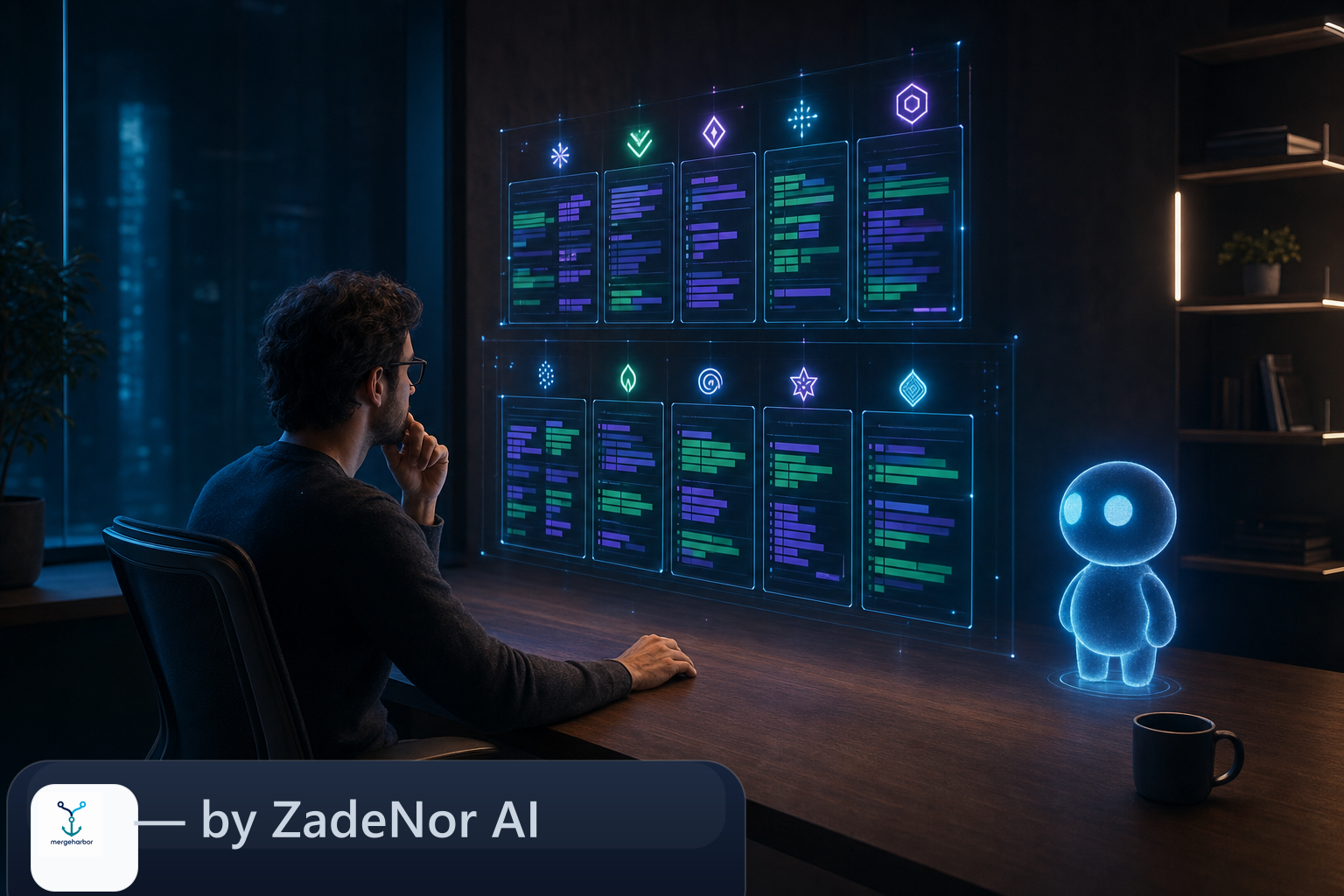
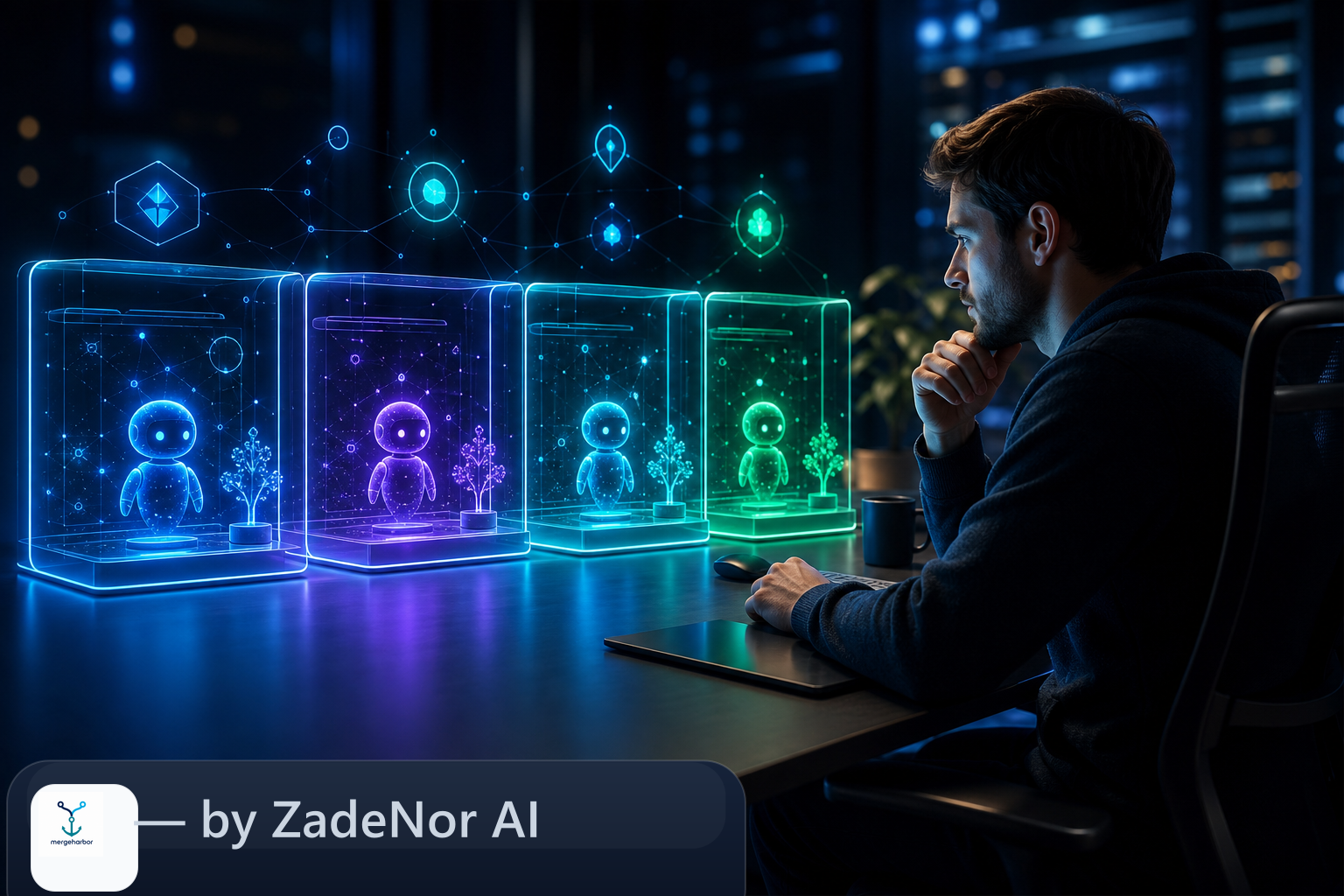
Since disposable per-task environments sits within the Isolation capability set, it fits naturally into how technical founders already use git. MergeHarbor tackles this with Disposable per-task environments: Clean, disposable environments are created per task and torn down after, so a failed run never poisons the shared workspace. Rather than one agent in one shared tree, MergeHarbor runs many agents in parallel, each isolated in its own git worktree. MergeHarbor connects parallel orchestration, full runtime isolation, early conflict detection and safe serialized merges, so the whole workflow moves as one. This is where MergeHarbor comes in — the open-source AI coding agent orchestrator built by ZadeNor AI.
How It Runs
Getting started is straightforward: point MergeHarbor at your repo and it spins up an isolated git worktree per task, so agents never share a working tree. When tasks complete, a safe, serialized merge queue lands them one at a time, rechecking for conflicts so the main branch stays green. Each agent runs in full runtime isolation with its own dependencies and build state, so one task can never corrupt another.
The Impact
You get a calm, orchestrated flow; your throughput goes up and your merges stay clean. For technical founders, that means many ai agents working in parallel, safely you can actually rely on. Teams using this approach see Many AI agents working in parallel, safely for multi-team repositories. The numbers follow the rigour: more work shipped in parallel, fewer late conflicts, and a main branch you can trust. Coordination stops being a daily scramble and starts being a competitive advantage.
Where to Begin
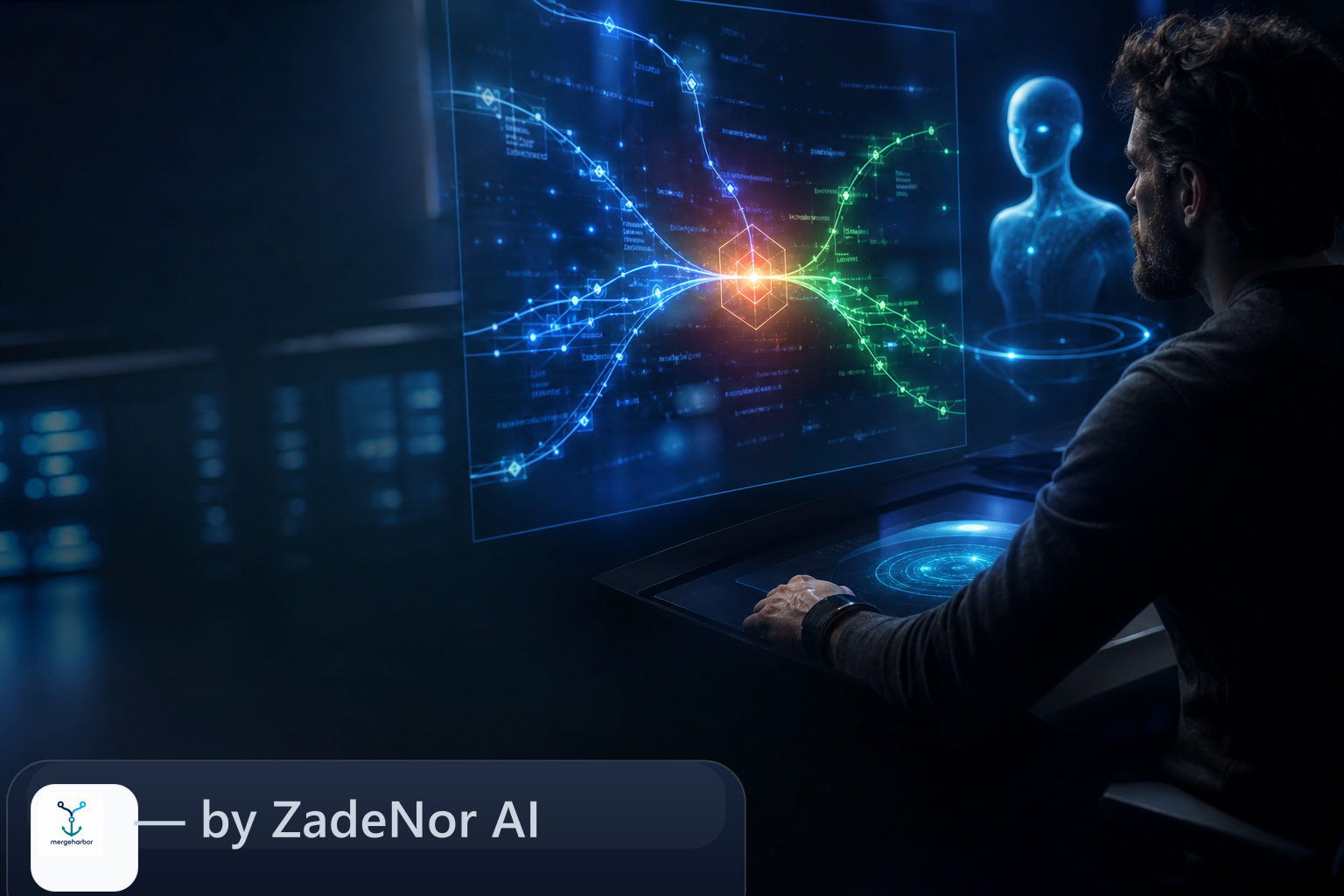
See it for yourself: MergeHarbor by ZadeNor AI fans work out across many agents, isolates every task, and lands it back through a safe, serialized merge. Open source (BSD-3-Clause) — clone it today.
For leaders, the real risk is strategic: coordination drag becomes a ceiling on how much AI-assisted work the team can take on. The cost of every ai tool speaks a different, incompatible interface in complex dependency graphs is rarely a single number — it is stalled work, late conflicts, and avoidable rework. Teams end up serializing everything by hand instead of running agents in parallel with confidence. Teams using this approach see Many AI agents working in parallel, safely for multi-team repositories. Coordination stops being a daily scramble and starts being a competitive advantage.
For leaders, the real risk is strategic: coordination drag becomes a ceiling on how much AI-assisted work the team can take on. What looks like a tooling problem is often an isolation and merge problem in disguise. Every minute lost to every ai tool speaks a different, incompatible interface in complex dependency graphs is a minute not spent on the change that actually matters. Teams using this approach see Many AI agents working in parallel, safely for multi-team repositories. You get a calm, orchestrated flow; your throughput goes up and your merges stay clean. The result is many ai agents working in parallel, safely, without trading away isolation or safety.
For leaders, the real risk is strategic: coordination drag becomes a ceiling on how much AI-assisted work the team can take on. The cost of every ai tool speaks a different, incompatible interface in complex dependency graphs is rarely a single number — it is stalled work, late conflicts, and avoidable rework. You get a calm, orchestrated flow; your throughput goes up and your merges stay clean. The numbers follow the rigour: more work shipped in parallel, fewer late conflicts, and a main branch you can trust.
Over time, every ai tool speaks a different, incompatible interface in complex dependency graphs translates into slower cycles, hidden regressions, and throughput no one wants to give away. The cost of every ai tool speaks a different, incompatible interface in complex dependency graphs is rarely a single number — it is stalled work, late conflicts, and avoidable rework. Teams end up serializing everything by hand instead of running agents in parallel with confidence. You get a calm, orchestrated flow; your throughput goes up and your merges stay clean. Teams using this approach see Many AI agents working in parallel, safely for multi-team repositories.