
ZadeNor AI
ZadeNor AI
Back to Blog
Quantum Computing

Diraq to Deploy Eight-Qubit Silicon Quantum Computer at Equinix Sydney Data Center

September 1, 2026
5 min
669 views
By ZadeNor AI Team
Diraq to Deploy Eight-Qubit Silicon Quantum Computer at Equinix Sydney Data Center

Diraq to Deploy Eight-Qubit Silicon Quantum Computer at Equinix Sydney Data Center

Diraq to Deploy Eight-Qubit Silicon Quantum Computer at Equinix Sydney Data Center

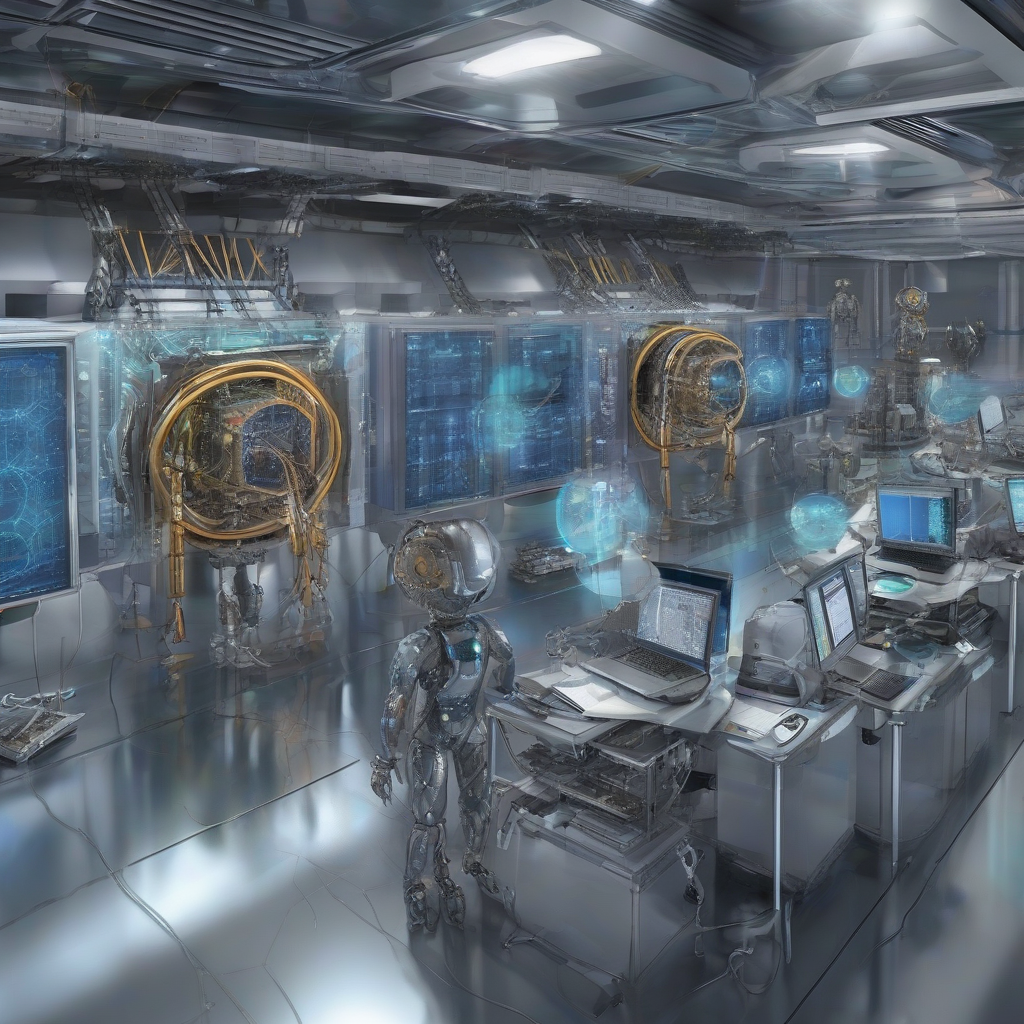
Silicon spin-qubit hardware vendor Diraq and global digital infrastructure provider Equinix, Inc. (Nasdaq: EQIX) have announced plans to deploy an eight-qubit quantum processing system inside an operational Equinix commercial data center in Sydney, Australia. Scheduled for installation completion in October 2026, the system represents the world’s first silicon spin quantum computer deployed within a shared commercial data center environment.

[ Diraq Data Center Deployment Architecture ]Physical Footprint & PowerHardware & Upgrade PathCommercial & Integration Goals• Standard Server Rack Form Factor• 8-Qubit Silicon Spin Processor• Live Hybrid Quantum-AI Workflows• Self-Contained Cryogenic Unit• CMOS Foundry Fabrication Compatibility• Secure Data Center Interconnects• Power Draw: <20 kW Total• Modular Qubit Scaling via Chip Swaps• Industry Partner Access & Compliance

Compact Form Factor and Hybrid Quantum-Classical Integration

Unlike large-scale custom cryogenic facilities, Diraq’s quantum computer is engineered as a self-contained system that integrates directly alongside standard enterprise servers, GPUs, and CPUs:

Infrastructure Footprint: The complete assembly—including the silicon chip, internal cryogenic cooling, and control electronics—operates within a standard data center rack layout while drawing less than 20 kW of power.

Modular Upgrade Path: Scaling the system to higher qubit capacities requires swapping the underlying silicon chip without altering the surrounding power, cooling, or rack infrastructure.

Manufacturing Compatibility: Diraq manufactures its spin qubits using existing commercial CMOS semiconductor foundries, leveraging the same fabrication processes used for consumer electronics to establish a path toward millions of qubits on a single chip.

Strategic Objectives and Commercial Deployment Roadmap

Led by Diraq Founder and CEO Andrew Dzurak and Equinix Australia Managing Director Jarrod Nink, the collaboration focuses on testing live, connected operations:

Performance Validation: Evaluating remote system monitoring, secure networking, and low-latency interaction between the QPU and classical CPU/GPU infrastructure in a commercial data center.

Hybrid Quantum-AI Workflows: Establishing operational benchmarks for combined quantum-classical algorithms, exploring how fleets of silicon QPUs can co-exist alongside accelerated AI compute clusters.

Enterprise Access: Once initial benchmarking is complete, Diraq and Equinix will open the Sydney facility to enterprise partners and commercial customers to test applications within an environment meeting data sovereignty, security, and compliance standards.

Review the media release on Diraq here.

August 31, 2026

											Mohamed Abdel-Kareem2026-08-31T18:49:22-07:00																								

	Leave A Comment Cancel reply

Comment

		Type in the text displayed above			

Δ

This site uses Akismet to reduce spam. Learn how your comment data is processed.
Source: https://quantumcomputingreport.com/diraq-to-deploy-eight-qubit-silicon-quantum-computer-at-equinix-sydney-data-center/

About the Author

ZadeNor AI Team is a leading expert in QUANTUM COMPUTING, contributing to cutting-edge research and development in the field.

Related Posts

DARPA Selects Atom Computing, Diraq, IBM, and IonQ for Final Stage C Verification under Quantum Benchmarking Initiative

DARPA Selects Atom Computing, Diraq, IBM, and IonQ for Final Stage C Verification under Quantum Benchmarking Initiative

DARPA has selected Atom Computing, Diraq, IBM, and IonQ for Stage C of its Quantum Benchmarking Initiative (QBI) to verify the performance of their fault-tolerant quantum computing architectures. This stage involves direct physical testing and empirical validation of their hardware, aiming to assess their potential for utility-scale operation by 2033. The chosen companies represent diverse qubit technologies, including neutral atoms, silicon spin qubits, superconducting transmons, and trapped ions. The post DARPA Selects Atom Computing, Diraq, IBM, and IonQ for Final Stage C Verification under Quantum Benchmarking Initiative appeared first on Quantum Computing Report. ]]>

297
5 min
Fermilab SQMS Center Identifies Microscopic Origins of Qubit Performance Variance Across Superconducting Transmons

Fermilab SQMS Center Identifies Microscopic Origins of Qubit Performance Variance Across Superconducting Transmons

Researchers at Fermilab's SQMS Center and collaborators identified microscopic material defects causing performance variations in superconducting qubits. Their study found that nanoscale fabrication geometries, surface oxides, and energy relaxation times are directly correlated. Specifically, single-nanometer shifts in surface oxide thickness, substrate trench depths below 20 nanometers, and sidewall etch profiles can cause up to a twofold variation in qubit performance. The post Fermilab SQMS Center Identifies Microscopic Origins of Qubit Performance Variance Across Superconducting Transmons appeared first on Quantum Computing Report. ]]>

256
5 min
KIST Delegation at Quantum World Congress 2026 Advances Korean Quantum Startup Ecosystem and U.S. Market Entry

KIST Delegation at Quantum World Congress 2026 Advances Korean Quantum Startup Ecosystem and U.S. Market Entry

A delegation from the Korea Institute of Science and Technology (KIST) attended the Quantum World Congress (QWC) 2026, fostering international partnerships and U.S. market entry for Korean quantum startups. KIST secured collaborations with entities like D-Wave Systems and Microsoft, aiming to bolster the quantum industry. Notably, OptiQ-Labs is set to establish a U.S. East Coast headquarters, marking a significant step in the global commercialization of Korean quantum technologies. The post KIST Delegation at Quantum World Congress 2026 Advances Korean Quantum Startup Ecosystem and U.S. Market Entry appeared first on Quantum Computing Report. ]]>

503
5 min