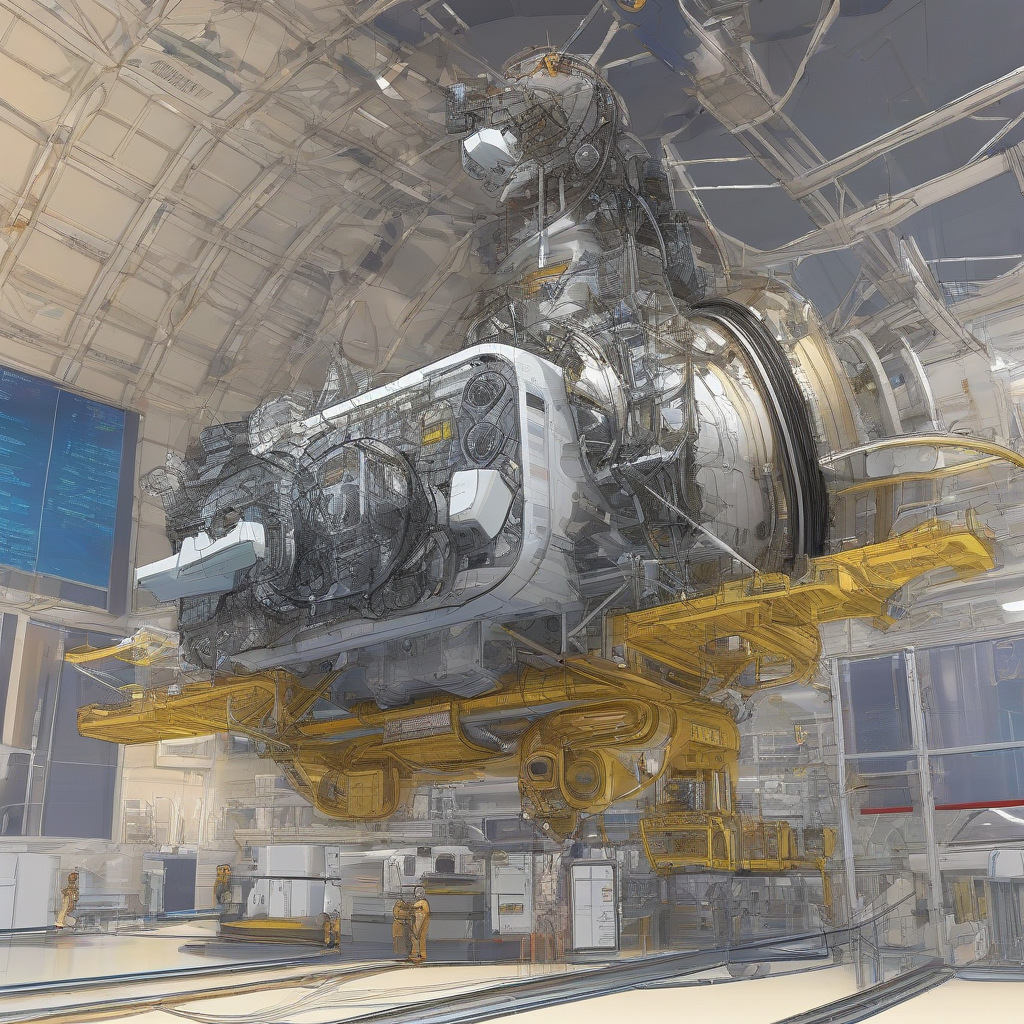
CubeSats’ Missions Begin
The Rise of CubeSats: Revolutionizing Space Exploration and Technology
As the world continues to push the boundaries of space exploration and technological innovation, a new class of satellites has emerged to play a crucial role in shaping the future of space research and development. CubeSats, small spacecraft weighing between 1-10 kilograms, have become a game-changer in the field of space technology, offering a cost-effective platform for science investigations, new technology demonstrations, and advanced mission concepts.
A Brief History of CubeSats
The concept of CubeSats dates back to the early 2000s, when a team of students at California Polytechnic State University (Cal Poly) designed and built a small satellite called "CubeSat" as a project for their senior design class. The satellite was designed to be a simple, low-cost platform for space research, and it was launched into space in 2003. Since then, the development of CubeSats has advanced rapidly, with government, industry, and academia collaborating to push the boundaries of what is possible with these small spacecraft.
The Benefits of CubeSats
So, what makes CubeSats so special? For one, they are incredibly cost-effective. Traditional satellites can cost hundreds of millions of dollars to design, build, and launch, while CubeSats can be built for a fraction of that cost. This makes them an attractive option for researchers and organizations that want to conduct space-based research without breaking the bank.
Another benefit of CubeSats is their versatility. They can be designed to perform a wide range of tasks, from Earth observations to technology demonstrations. They can also be used to test new technologies and concepts before scaling them up to larger satellites.
CubeSats in Action
One of the most exciting aspects of CubeSats is their ability to be used for a wide range of applications. For example, NASA has used CubeSats to study the Earth's climate, conduct astronomical research, and even test new technologies for deep space exploration.
In 2020, NASA launched a series of CubeSats called the "Swarm" mission, which was designed to study the Earth's magnetic field. The mission consisted of four CubeSats that were launched into space and used to collect data on the Earth's magnetic field. The data collected by the Swarm mission has been used to improve our understanding of the Earth's magnetic field and its impact on the planet's climate.
The Future of CubeSats
As the technology behind CubeSats continues to advance, we can expect to see even more exciting applications in the future. For example, CubeSats are being used to develop new technologies for deep space exploration, such as advanced propulsion systems and communication systems.
In addition, CubeSats are being used to study the Earth's climate and weather patterns. For example, the European Space Agency (ESA) has launched a series of CubeSats called the "Earth Explorer" mission, which is designed to study the Earth's climate and weather patterns.
Conclusion
CubeSats have revolutionized the field of space research and development, offering a cost-effective platform for science investigations, new technology demonstrations, and advanced mission concepts. As the technology behind CubeSats continues to advance, we can expect to see even more exciting applications in the future. Whether it's studying the Earth's climate, conducting astronomical research, or testing new technologies for deep space exploration, CubeSats are playing a crucial role in shaping the future of space research and development.
Forward-Looking Thoughts
As we look to the future, it's clear that CubeSats will continue to play a vital role in space research and development. With their cost-effectiveness, versatility, and ability to be used for a wide range of applications, CubeSats are an attractive option for researchers and organizations around the world.
One area that holds great promise for CubeSats is the development of new technologies for deep space exploration. With the help of CubeSats, we can test new propulsion systems, communication systems, and other technologies that will be needed for future deep space missions.
Another area that holds great promise for CubeSats is the study of the Earth's climate and weather patterns. With the help of CubeSats, we can collect data on the Earth's climate and weather patterns, which will help us to better understand the impact of climate change on the planet.
Overall, the future of CubeSats is bright, and we can expect to see even more exciting applications in the years to come. Whether it's studying the Earth's climate, conducting astronomical research, or testing new technologies for deep space exploration, CubeSats are playing a crucial role in shaping the future of space research and development.
Source: https://www.nasa.gov/image-article/cubesats-missions-begin/