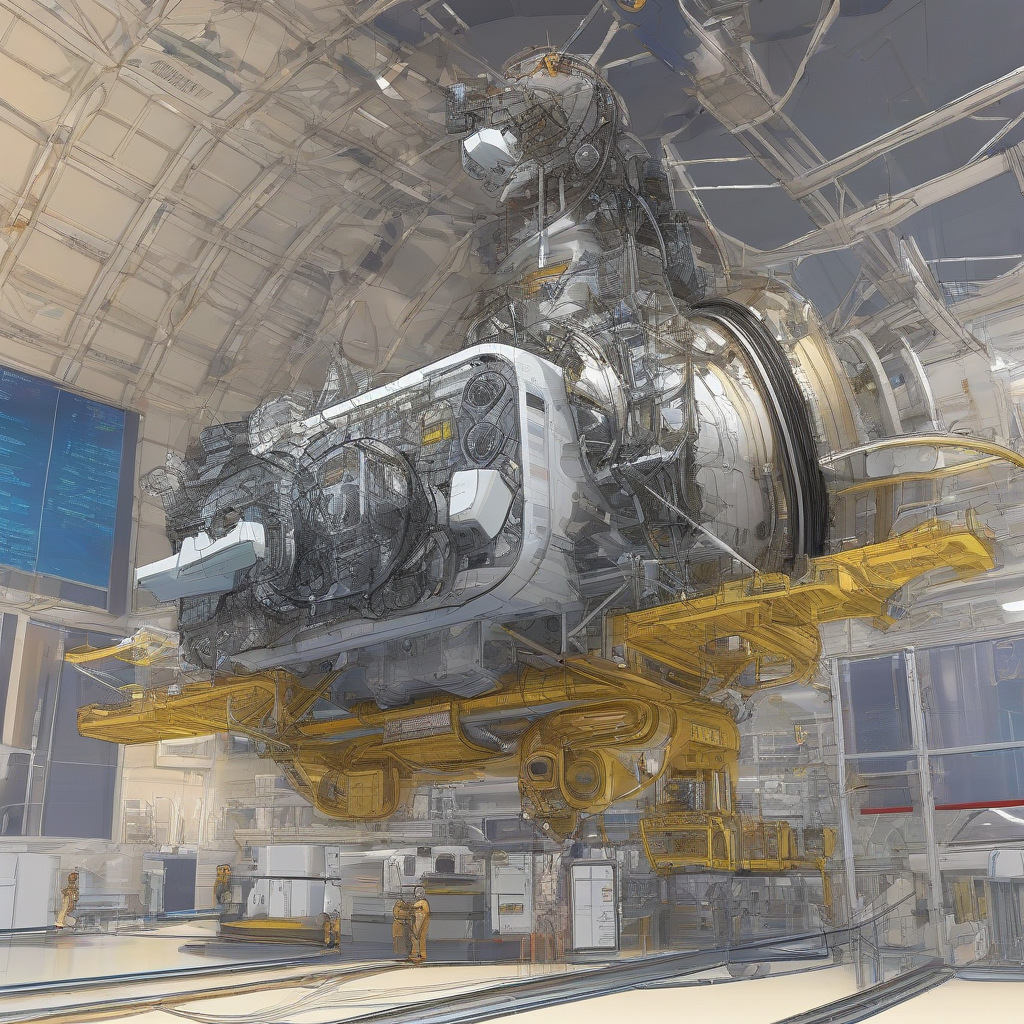
Crew-12: Docking, hatch opening and welcome remarks
Crew-12 Embarks on Historic Mission to the International Space Station
As the world watched with bated breath, the Crew-12 spacecraft successfully docked with the International Space Station (ISS) on February 14, 2026, at 21:15 CET. This momentous occasion marked the beginning of a new chapter in space exploration, with four accomplished astronauts embarking on a nine-month mission to conduct groundbreaking research and operations on the ISS.
Meet the Crew
At the helm of the Crew-12 mission is NASA astronaut Jessica Meir, a seasoned commander with extensive experience in space travel. Alongside her is Jack Hathaway, a skilled pilot and mission specialist, who has spent years honing his skills in the field. Rounding out the crew are Roscosmos cosmonaut Andrei Fedyaev and ESA astronaut Sophie Adenot, a trailblazing mission specialist who becomes the first of her class, the Hoppers, to fly.
εpsilon: A Mission of Discovery
Sophie Adenot's mission, aptly named εpsilon, is a testament to her commitment to pushing the boundaries of space exploration. As the first Hopper to venture into space, she will conduct a wide range of tasks, including European-led scientific experiments and medical research. Her contributions will also support Earth observation activities and operations and maintenance on the Station.
Docking Operations: A Complex and Precise Process
The docking process, which took place on February 14, 2026, at 21:15 CET, was a masterclass in precision and coordination. The Crew-12 spacecraft, traveling at a speed of approximately 17,500 mph, carefully aligned itself with the ISS, using a combination of GPS and onboard navigation systems. The docking process itself was a series of intricate maneuvers, involving the deployment of a 16-foot-long robotic arm and the use of a specialized docking mechanism.
Hatch Opening and Welcome Remarks
As the Crew-12 spacecraft successfully docked with the ISS, the hatch was opened, and the astronauts were greeted by their colleagues already present on the Station. The welcome remarks, filled with warmth and camaraderie, marked the beginning of a new era in space exploration. The Crew-12 astronauts will spend the next nine months conducting research, operating the Station, and pushing the boundaries of human knowledge.
Practical Insights and Implications
The Crew-12 mission has significant implications for the future of space exploration. As the first Hopper to fly, Sophie Adenot's mission paves the way for a new generation of astronauts, breaking down barriers and pushing the boundaries of what is possible. The research conducted on the ISS will have far-reaching implications for fields such as medicine, Earth observation, and space technology.
Forward-Looking Thoughts
As the Crew-12 mission embarks on its historic journey, we are reminded of the vast potential that lies ahead. The ISS, a symbol of international cooperation and collaboration, serves as a stepping stone for future missions to the Moon, Mars, and beyond. The Crew-12 astronauts, with their exceptional skills and dedication, will play a crucial role in shaping the future of space exploration, inspiring a new generation of scientists, engineers, and explorers.
The Crew-12 mission is a testament to human ingenuity and the boundless potential of space exploration. As we watch with bated breath, we are reminded of the incredible feats that can be achieved when we come together to push the boundaries of what is possible.
Source: https://www.esa.int/ESA_Multimedia/Videos/2026/02/Crew-12_Docking_hatch_opening_and_welcome_remarks