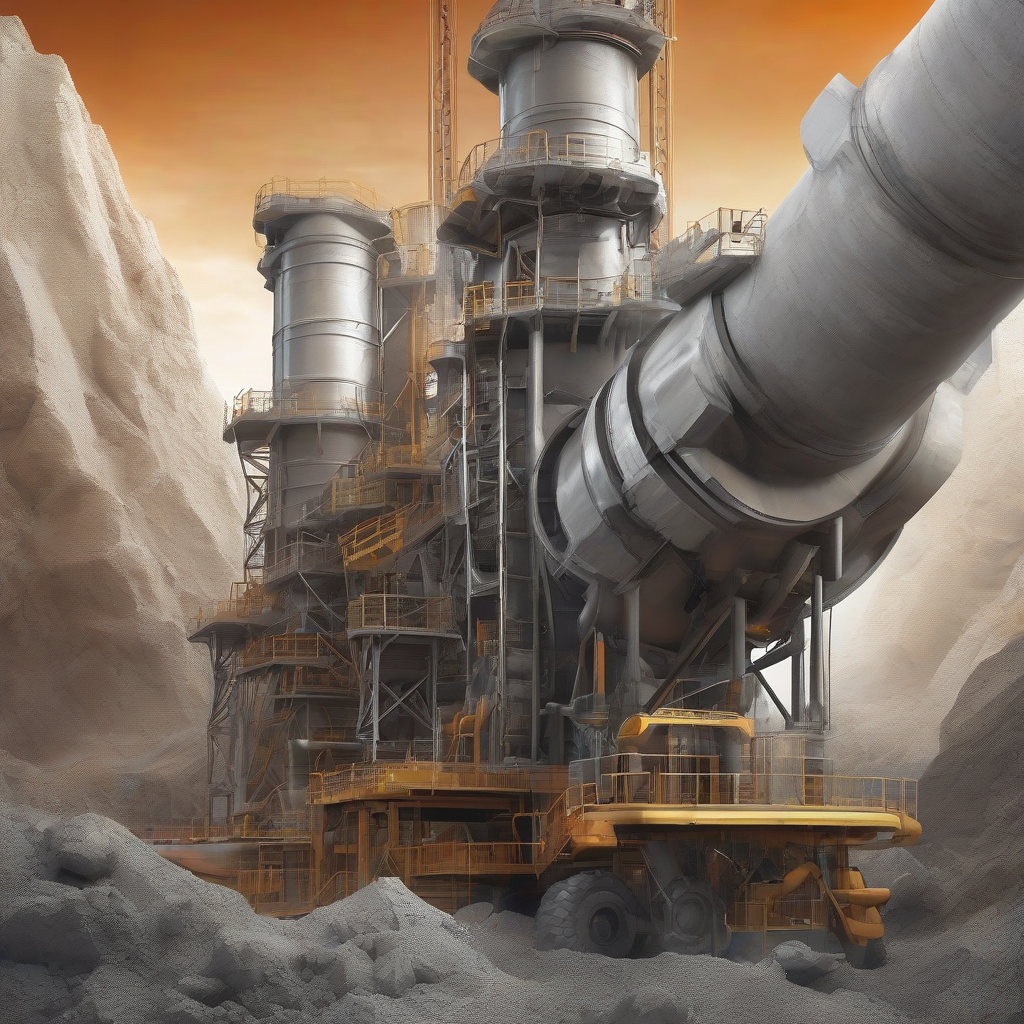
Brimstone and its one-stop process for making cleaner cement and critical minerals
10 Climate Tech Companies to Watch 2026See the full list
Brimstone is making strides on two industrial problems, reducing the emissions from cement and providing a way to produce more critical minerals within the US. If the company can do both, with the same rocks in the same plant, it would unlock a cleaner and more efficient process for manufacturing building materials, aluminum, steel, and more.
Brimstone is a code-switching climate tech company for these polarized political times. The US-based startup—part green cement company, part critical mineral producer—is well positioned to sustain its momentum no matter which party is in power.
During the more climate-focused Biden administration, the company’s primary pitch was its ability to produce cement while generating about 60% less greenhouse-gas emissions. It achieves this by switching to silicate rocks instead of standard limestone, which releases carbon dioxide when it’s heated. The conventional process for creating cement, the binding used to produce concrete, contributes about 8% of the world’s carbon dioxide pollution.
Under the protectionist and climate-denying Trump administration, however, the company is now stressing the secondary benefits of its process: the ability to extract other valuable materials from those same silicate rocks.
The company has said for years that its process could also generate materials that can be used to strengthen cement. But in early 2025, Brimstone highlighted that it would be able to also produce smelter-grade alumina, the raw material used in aluminum.
It then revealed it had another trick up its sleeve late last year: the ability to make steel, magnesium, titanium, and other critical minerals from the same rock in a single refinery.
The company’s CEO, Cody Finke, said those materials represent a $2.4 trillion global market. Brimstone’s approach promises to provide a domestic path for goods mostly produced today in China, the subject of Trump’s harshest trade policies and rhetoric.
Key indicators
Industry: Heavy industry
Founded: 2019

Headquarters: Oakland, California, US

Notable fact: In 2023, the company earned third-party industry certification for its process for manufacturing Portland cement, allowing its product to qualify for standard manufacturing projects.

 Potential for impact
The company made a very big deal of its newfound ability to produce all these other goods, arguing its process would bolster national security and usher in the “next generation of industrial refining.” The basic environmental promise is that generating all these materials from the same rock and a single mining process would require dramatically less energy and produce far less waste than manufacturing them separately.
“I think that we have one of the generational companies that's actually able to create an industrial revolution,” Finke says.
To which we would say: Well, we’ll see.
Caveats
Brimstone has yet to produce anything at a commercial scale, and it faces numerous financial and technical challenges. Some observers are dubious that the company will be able to economically extract sufficient quantities of so many materials from a single type of rock—or overcome the cost and labor issues that make mining and refining minerals a tough business in the US.
Brimstone also suffered a major stumble last year, when the Trump administration revoked a $189 million grant intended to subsidize its next plant, a planned commercial demonstration project in Reno, Nevada.
Finke says the company continues to have fruitful conversations with the administration about restoring those funds, in which Brimstone has emphasized its potential to boost domestic production of critical minerals. He has previously said the company will be able to proceed with the development of the plant, even without that grant or other subsidies.
Next steps
The company expects to begin operating the Reno facility, which will only produce cement, supplementary materials, and alumina, in 2028. That means Brimstone will still need to finance and build its first full-scale factory to deliver the steel, titanium, and other critical materials, likely pushing the timeline for doing so into the next decade.
Based on its progress so far, though, the company has already lined up several commercial deals. That includes agreements to supply cement to retail giant Amazon and alumina to Century Aluminum, one of the US’s largest producers of its namesake metal.
Even if Brimstone doesn’t bring about another industrial revolution, the company is equipped to slash emissions from cement, which is reason enough to pay close attention.
If Brimstone also manages to dramatically reduce the energy, pollution, and costs associated with extracting and refining rock to produce all—or any—of those other goods, that would represent a big corporate and climate win as well.
Deep Dive
Climate change and energy
Batteries just broke another record in the US
Huge grid-scale batteries are thriving, but smaller residential systems have lagged.
By Casey Crownhartarchive page
What’s behind this summer’s heat, and why 2027 could be worse
El Niño? Climate change? All of the above?
By Casey Crownhartarchive page
How engineered microbes could help feed the world’s crops
Startup Switch Bioworks hopes to use microbes to reduce demand for chemical fertilizer.
By Casey Crownhartarchive page
How much hydrogen awaits us underground?
The global gold rush for underground stores of hydrogen fuel continues. But researchers are still sorting out how much of the stuff there is.
By James Dinneenarchive page
Stay connected
Illustration by Rose Wong
Get the latest updates fromMIT Technology Review
Discover special offers, top stories, upcoming events, and more.
Enter your email
Privacy PolicyThank you for submitting your email!
Explore more newsletters
It looks like something went wrong.
            We’re having trouble saving your preferences.
            Try refreshing this page and updating them one
            more time. If you continue to get this message,
            reach out to us at
            customer-service@technologyreview.com with a list of newsletters you’d like to receive.