Current State
Today, many teams serialize agent tasks by hand, learning about a conflict only at merge time. The status quo leans heavily on manual coordination, which simply cannot keep pace with how fast agents work. Right now, AI-assisted development often runs one agent at a time in a single shared working tree.
The Emerging Trend
Those who adopt a parallel agent orchestrator early will set the standard others scramble to match. Expect orchestration to handle the isolation and merging so people can own the architecture and review decisions. In the near future, teams will assume any serious workflow can run many agents in parallel and merge their work safely. The direction is unmistakable: development is becoming multi-agent, isolated, and safely-merged by default.
The Challenge Ahead
For a Associate, Open Source, one failed agent run poisoning the whole workspace is more than an inconvenience — it is a daily drag on velocity and peace of mind. A recurring challenge for internal developer platform teams is one failed agent run poisoning the whole workspace. The issue shows up most clearly as One failed agent run poisoning the whole workspace for multi-team repositories. It rarely starts as a crisis; one failed agent run poisoning the whole workspace builds quietly until a big merge makes it impossible to ignore.
How MergeHarbor Prepares You
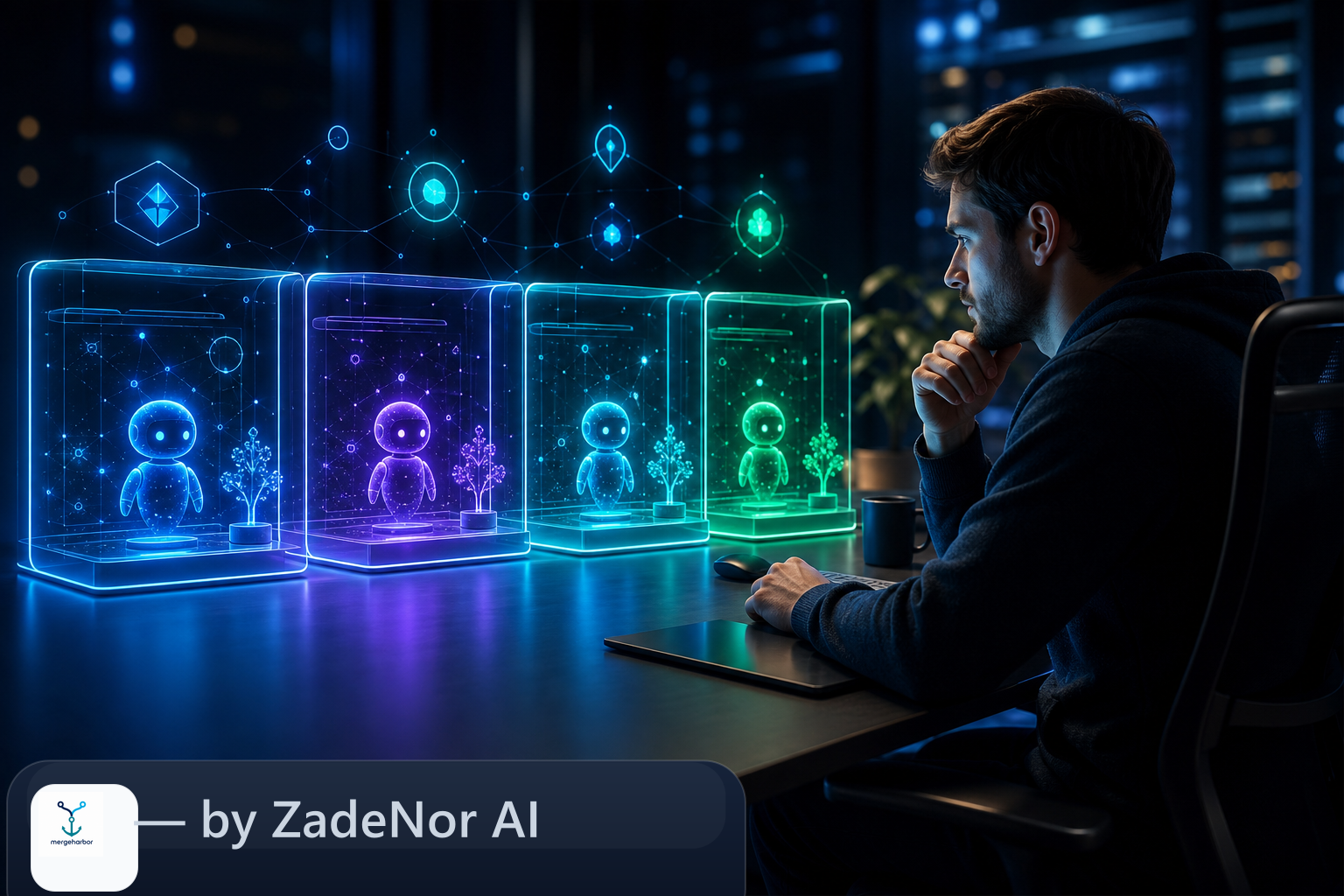
Rather than one agent in one shared tree, MergeHarbor runs many agents in parallel, each isolated in its own git worktree. This is where MergeHarbor comes in — the open-source AI coding agent orchestrator built by ZadeNor AI. Since disposable per-task environments sits within the Isolation capability set, it fits naturally into how internal developer platform teams already use git.
Where This Goes
Those who adopt a parallel agent orchestrator early will set the standard others scramble to match. In the near future, teams will assume any serious workflow can run many agents in parallel and merge their work safely. Expect orchestration to handle the isolation and merging so people can own the architecture and review decisions. The direction is unmistakable: development is becoming multi-agent, isolated, and safely-merged by default.
Preparation Strategy
Start where the risk is highest — that is where isolation and early conflict detection pay off fastest. The practical move is to give every agent its own isolated worktree first and let the orchestrator handle scheduling and merging. Treat isolation and safe merging as a velocity lever, not an overhead, and tool it accordingly. Give yourself a control plane that scales with your ambitions instead of with your terminal count. Pilot MergeHarbor on one parallel workflow and let the merge queue serialize landings before you scale the fleet.
The Payoff
For internal developer platform teams, that means runtime isolation you can trust you can actually rely on. The result is runtime isolation you can trust, without trading away isolation or safety. Teams using this approach see Runtime isolation you can trust for cross-cutting changes. You get a calm, orchestrated flow; your throughput goes up and your merges stay clean. Coordination stops being a daily scramble and starts being a competitive advantage.
Get Started
Want runtime isolation you can trust for cross-cutting changes as a Internal Developer Platform Teams? Explore MergeHarbor by ZadeNor AI and see how isolated worktrees and safe serialized merges keep parallel agents fast and conflict-free. Free and open source.
For leaders, the real risk is strategic: coordination drag becomes a ceiling on how much AI-assisted work the team can take on. What looks like a tooling problem is often an isolation and merge problem in disguise. Every minute lost to one failed agent run poisoning the whole workspace is a minute not spent on the change that actually matters. For internal developer platform teams, that means runtime isolation you can trust you can actually rely on. Teams using this approach see Runtime isolation you can trust for cross-cutting changes. Coordination stops being a daily scramble and starts being a competitive advantage.
For leaders, the real risk is strategic: coordination drag becomes a ceiling on how much AI-assisted work the team can take on. The cost of one failed agent run poisoning the whole workspace is rarely a single number — it is stalled work, late conflicts, and avoidable rework. You get a calm, orchestrated flow; your throughput goes up and your merges stay clean. The numbers follow the rigour: more work shipped in parallel, fewer late conflicts, and a main branch you can trust. The result is runtime isolation you can trust, without trading away isolation or safety.
Teams end up serializing everything by hand instead of running agents in parallel with confidence. For leaders, the real risk is strategic: coordination drag becomes a ceiling on how much AI-assisted work the team can take on. The result is runtime isolation you can trust, without trading away isolation or safety. The numbers follow the rigour: more work shipped in parallel, fewer late conflicts, and a main branch you can trust.
For leaders, the real risk is strategic: coordination drag becomes a ceiling on how much AI-assisted work the team can take on. Teams end up serializing everything by hand instead of running agents in parallel with confidence. You get a calm, orchestrated flow; your throughput goes up and your merges stay clean. For internal developer platform teams, that means runtime isolation you can trust you can actually rely on. Coordination stops being a daily scramble and starts being a competitive advantage.