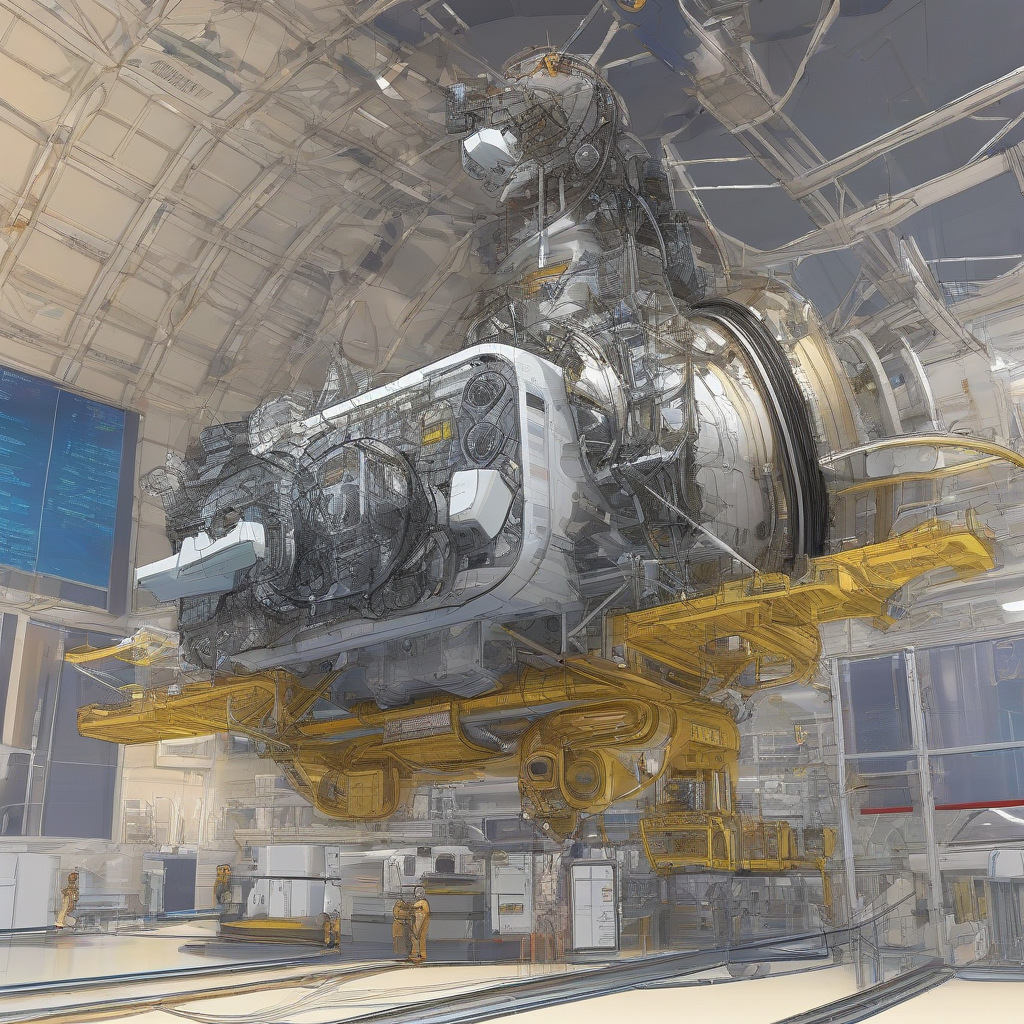
Artemis II Vehicle Manager Branelle Rodriguez Gets Orion Ready for “Go”
Artemis II Vehicle Manager Branelle Rodriguez: The Woman Behind the Historic Mission
As the Artemis II Orion spacecraft prepares to embark on its historic mission to the Moon, the team behind its success is working tirelessly to ensure every detail is in place. At the forefront of this effort is Branelle Rodriguez, the Artemis II vehicle manager for the Orion Program. With a 21-year career at NASA, Rodriguez has been instrumental in every stage of the spacecraft's lifecycle, from development and production to testing and final launch readiness.
A Passion for Space Exploration
Rodriguez's fascination with space began at a young age, growing up in northern Minnesota where she was lucky to experience the beauty of clear, starlit skies on a regular basis. When she was a teenager, her family encouraged her to attend Space Academy in Huntsville, Alabama, where she participated in mock astronaut training, flight controller simulations, and hands-on engineering projects. "It was a pivotal experience that only deepened my passion for space exploration," she recalled.
A Determined Career Path
Rodriguez applied to NASA's internship program while studying mechanical engineering at the University of North Dakota. She was not accepted on her first attempt, but she did not give up. She spent a semester interning at Dow Chemical to gain more experience while continuing to apply for internships across multiple NASA centers. "On my eighth attempt, I was accepted at Johnson," she said. Three internships and one graduation later, Rodriguez landed a full-time position in the Engineering Directorate's Crew and Thermal Systems Division.
Leadership and Teamwork
As a student athlete, Rodriguez knew the importance of teamwork from a young age, but said its value really became clear after joining NASA. "Some goals take time. There will be setbacks and struggles, but when you stick together, you build the kind of trust and relationships that are the foundation for long-term success," she said. "That's exactly what NASA represents. We take on some of the most complex and ambitious challenges imaginable—and we do it as a team."
Balancing Career and Family
Rodriguez also appreciates having a team outside of the office. One of the greatest challenges she has faced is balancing the demands of a fulfilling, high-impact career with the needs of her family. "Like many parents, there are days when everything feels in sync, and days when I know I've fallen short," she said, acknowledging that she must continually adapt to shifting needs and prioritize tasks to remain focused on what matters most at any given moment. "I'm beyond grateful for my family," she said. "They are my foundation, and they truly understand and support my passion for the work I do. Without their love, and the broader village that helps make it all possible, I wouldn't be where I am today."
Passing on a Legacy
To her children and future generations, Rodriguez hopes to pass on a desire to keep exploring. "As humans, we are naturally driven to grow, learn, and push beyond our limits," she said. "Space exploration is still in its early stages when viewed through the lens of history, and the achievements of the next generation will be truly extraordinary. I want them to carry forward the curiosity, courage, and determination needed to reach new frontiers and unlock the unknown."
The Future of Space Exploration
As the Artemis II mission prepares to embark on its historic journey to the Moon, the team behind its success is working tirelessly to ensure every detail is in place. With Branelle Rodriguez at the forefront, the Orion Program is poised to make significant strides in space exploration. As we look to the future, it is clear that the achievements of the next generation will be truly extraordinary. With continued determination and teamwork, we can unlock the unknown and push beyond our limits.
Explore More
NASA Selects 2 Instruments for Artemis IV Lunar Surface Science
NASA has selected two science instruments designed for astronauts to deploy on the surface of the Moon as part of the Artemis IV mission. The instruments will provide critical data on the lunar environment and help scientists better understand the Moon's composition and geology.
Student Art Murals at Johnson Celebrate 25 Years of Humanity in Space
To celebrate 25 years of humanity in space, students at Johnson Space Center created a series of art murals depicting the history of space exploration. The murals showcase the achievements of astronauts and the incredible progress made in space travel.
Sugars, ‘Gum,’ Stardust Found in NASA’s Asteroid Bennu Samples
NASA's OSIRIS-REx mission has returned samples from the asteroid Bennu, providing scientists with a unique opportunity to study the composition of the asteroid. The samples contain a variety of compounds, including sugars, 'gum,' and stardust.
Word Count: 1038