The Capability in Focus
Most direct-to-consumer brands know the feeling: the answer is somewhere in the files, but reaching it means a queue, a query, or a rebuild. For direct-to-consumer brands, the difference between a fast decision and a stalled one often comes down to how quickly a simple question about the data gets a trustworthy answer. Every team has data in spreadsheets and exports — the hard part is turning it into answers without waiting on an analyst. The way a team works with its data says a lot about how quickly it can act.
The Reason
The issue shows up most clearly as No easy way to combine data from several sources for multi-dataset joins. Left unaddressed, no easy way to combine data from several sources compounds: questions pile up, reports go stale, and insight stays locked away. It rarely starts as a crisis; no easy way to combine data from several sources builds quietly until a board deadline makes it impossible to ignore. When no easy way to combine data from several sources sets in, decisions slow down and the data team drowns in ad-hoc requests.
The Detail
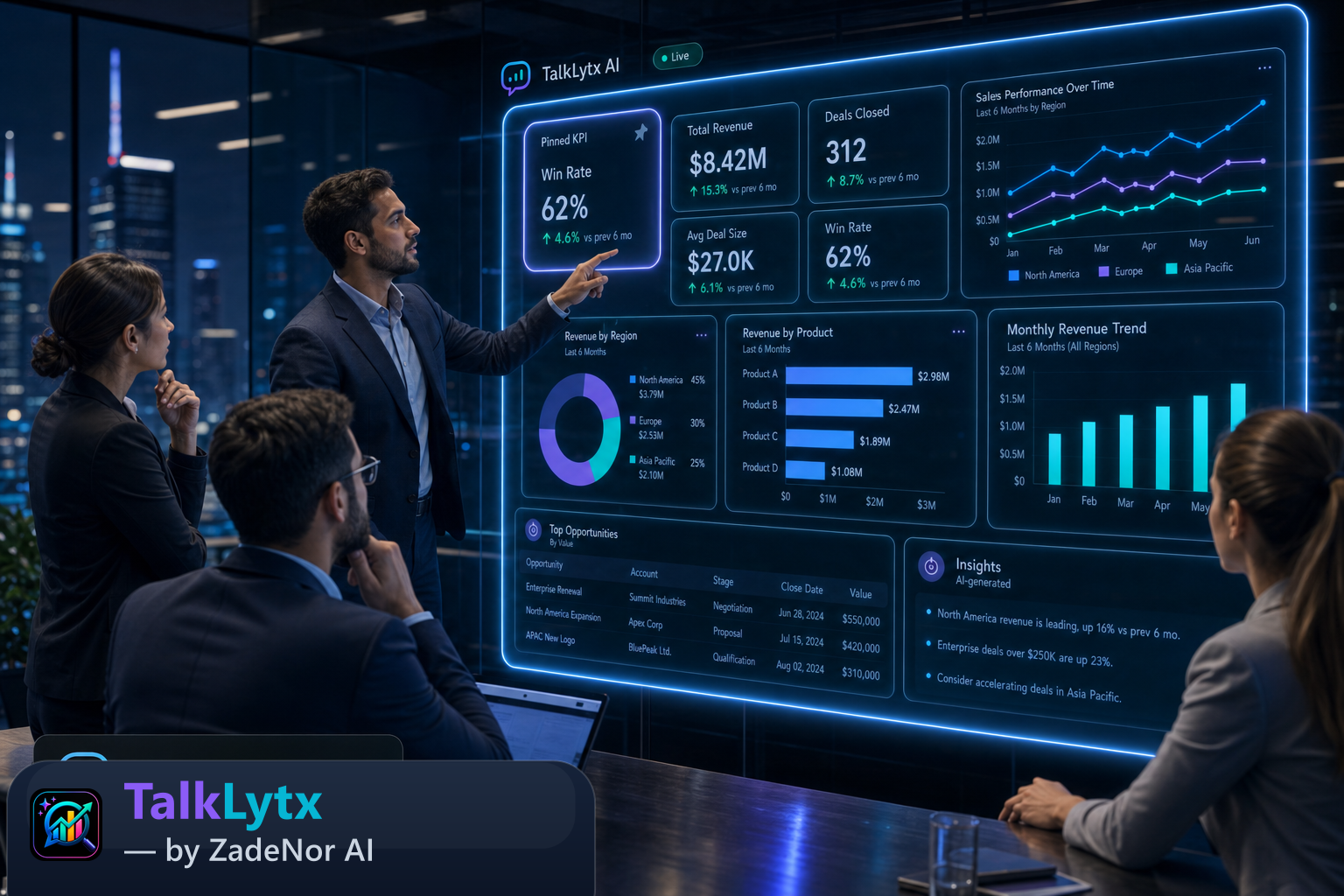
Since schema browser sits within the Query Lab capability set, it fits naturally into how direct-to-consumer brands already work. Because the answer, the SQL and the chart arrive together, you work from one transparent source of truth instead of a black box. This is where TalkLytx comes in — the conversational data-analytics platform built by ZadeNor AI. TalkLytx tackles this with Schema browser: Explore tables, columns and types at a glance, so you always know what you can query without leaving the workspace. TalkLytx connects natural-language questions, AI-generated SQL, and instant charts, so the whole analysis moves like a conversation.
How It Runs
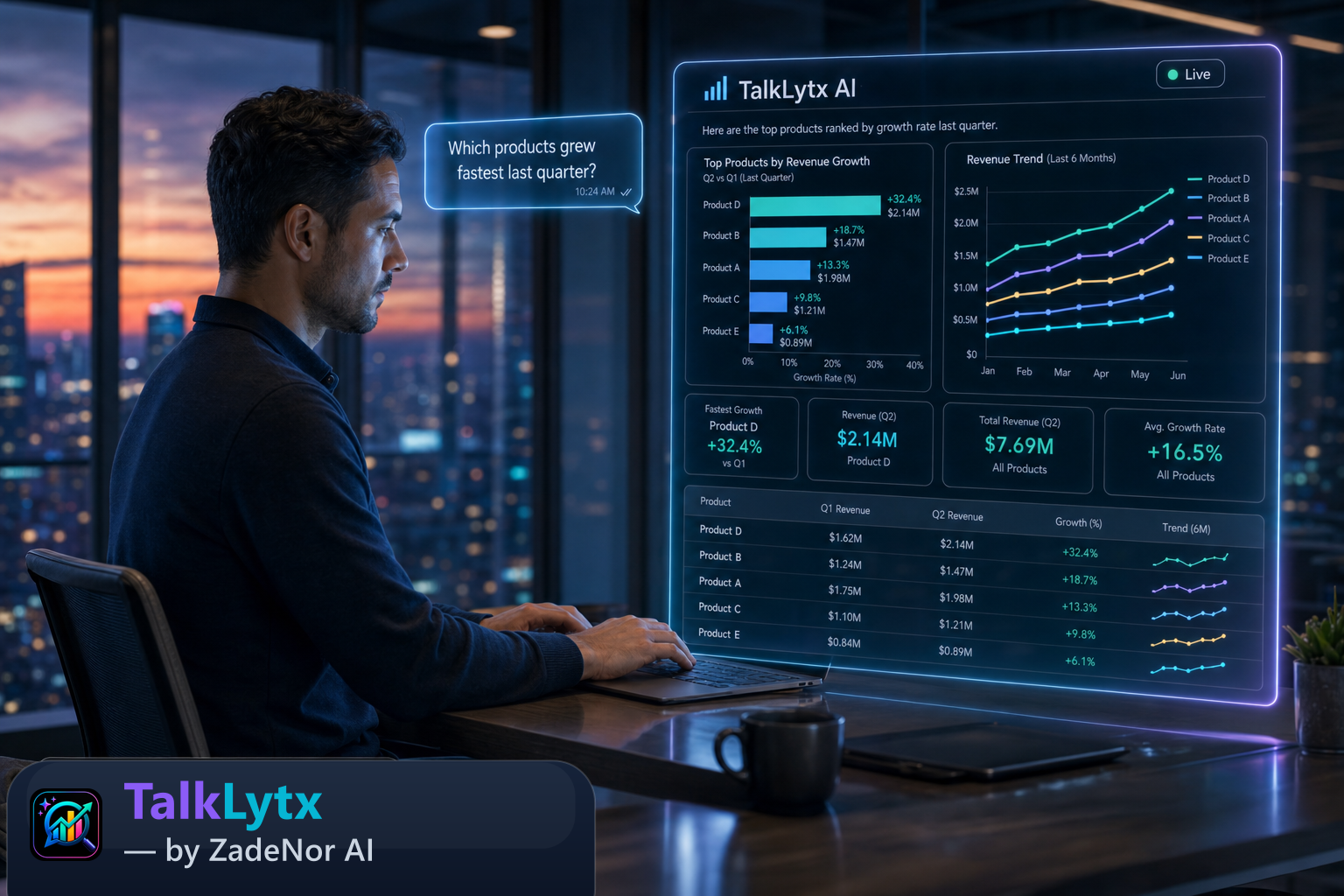
Follow-up questions keep their context, so refining an answer feels like a conversation rather than a rewrite. Ask a question in plain English and TalkLytx writes the SQL, runs it, and answers with a written explanation and a chart. Getting started is straightforward: drag in a CSV, JSON, Excel or PDF — or point TalkLytx at a URL — and start asking questions in seconds.
The Impact
For direct-to-consumer brands, that means less time wrangling files, more time deciding you can actually rely on. People using this approach see Less time wrangling files, more time deciding for multi-dataset joins. Analytics stops being a bottleneck and starts being a shared, everyday capability. The numbers follow the rigour: fewer ad-hoc requests, faster reporting cycles, and insight everyone can see. You get a calm, self-serve analytics workspace; decisions get faster and every team can answer its own questions.
Where to Begin
See it for yourself: TalkLytx by ZadeNor AI writes the SQL, draws the chart, and shows you the logic behind every number. Start free today.
For leaders, the real risk is strategic: an analytics bottleneck becomes a ceiling on how fast the business can learn. Teams end up waiting on the BI queue instead of exploring the data themselves. Every hour lost to no easy way to combine data from several sources is an hour not spent on the decision the numbers were meant to inform. Analytics stops being a bottleneck and starts being a shared, everyday capability. The result is less time wrangling files, more time deciding, without adding headcount or waiting on the queue.
Over time, no easy way to combine data from several sources translates into slower reporting, duplicated work, and insight that never reaches the people who need it. For leaders, the real risk is strategic: an analytics bottleneck becomes a ceiling on how fast the business can learn. The numbers follow the rigour: fewer ad-hoc requests, faster reporting cycles, and insight everyone can see. The result is less time wrangling files, more time deciding, without adding headcount or waiting on the queue. Analytics stops being a bottleneck and starts being a shared, everyday capability.
The cost of no easy way to combine data from several sources is rarely a single number — it is decisions made late, on stale data, or on gut feel. Over time, no easy way to combine data from several sources translates into slower reporting, duplicated work, and insight that never reaches the people who need it. What looks like a tooling problem is often an access and trust problem in disguise. People using this approach see Less time wrangling files, more time deciding for multi-dataset joins. The numbers follow the rigour: fewer ad-hoc requests, faster reporting cycles, and insight everyone can see.
The cost of no easy way to combine data from several sources is rarely a single number — it is decisions made late, on stale data, or on gut feel. What looks like a tooling problem is often an access and trust problem in disguise. The numbers follow the rigour: fewer ad-hoc requests, faster reporting cycles, and insight everyone can see. The result is less time wrangling files, more time deciding, without adding headcount or waiting on the queue.
For leaders, the real risk is strategic: an analytics bottleneck becomes a ceiling on how fast the business can learn. Over time, no easy way to combine data from several sources translates into slower reporting, duplicated work, and insight that never reaches the people who need it. The result is less time wrangling files, more time deciding, without adding headcount or waiting on the queue. People using this approach see Less time wrangling files, more time deciding for multi-dataset joins. For direct-to-consumer brands, that means less time wrangling files, more time deciding you can actually rely on.