From the C-Suite
Customer expectations in Legal have shifted, and support has to keep up. For legal businesses, every customer conversation is a chance to build trust or lose it. Most legal teams know the feeling: more questions than hours in the day. The way a legal company handles questions says a lot about how it treats its customers.
The Leadership Challenge
A recurring challenge for legal teams is slow response to inbound interest in 24/7 operations. When slow response to inbound interest in 24/7 operations sets in, customers wait longer and satisfaction slips. It rarely starts as a crisis; slow response to inbound interest in 24/7 operations builds gradually until it is impossible to ignore.
The Business Risk
The cost of slow response to inbound interest in 24/7 operations is rarely a single number — it is slower responses, frustrated customers, and lost opportunities. Every delayed answer chips away at confidence in your legal brand. What looks like a support problem is often a revenue and retention problem in disguise. Teams end up firefighting instead of focusing on the work that actually moves the business. Over time, slow response to inbound interest in 24/7 operations translates directly into churn, negative reviews, and rising cost to serve.
What Customers Want
Customers now expect a reply in minutes, not days. They want answers in their own language, on their own schedule. Anything slower than instant feels broken to today's legal customer.
What TalkLinx Enables
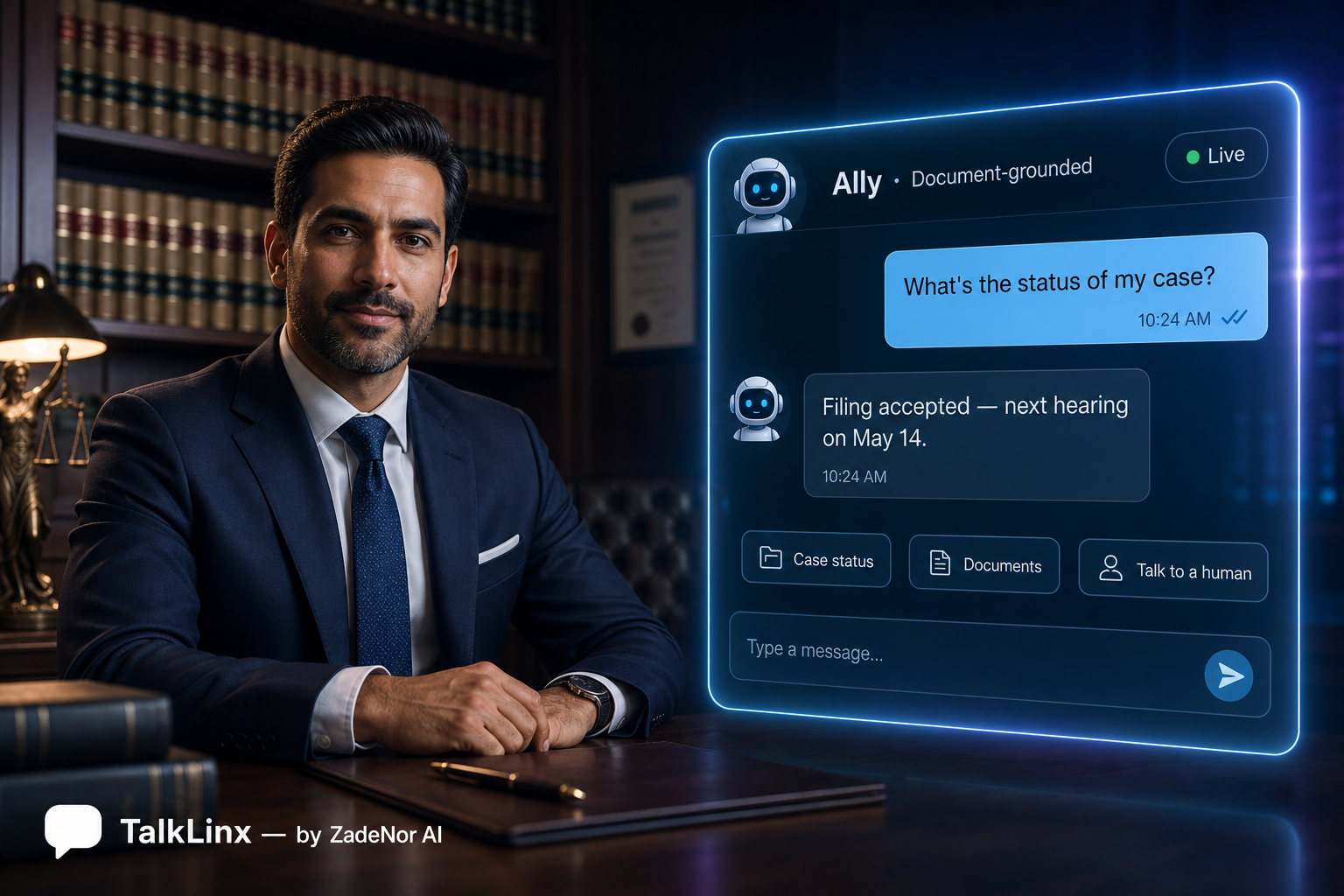
The assistant, named Ally, handles repetitive questions instantly and escalates the rest with full context. TalkLinx tackles this with Visitor intelligence: Insight into who is asking what, so teams know where to focus next. Rather than another generic chatbot, TalkLinx grounds every answer in your own knowledge base. Because visitor intelligence is part of the Business Intelligence capability set, it fits naturally into how legal teams already work.
The Play
Start where the volume is highest — that is where an AI support assistant pays off fastest. The practical move is to automate the repetitive questions first and reserve human attention for the complex ones. Give your team an assistant that scales with demand instead of headcount. Pilot TalkLinx on your busiest support topic and measure resolution time before and after. Treat support as a growth lever, not a cost center, and tool it accordingly.
The Bottom Line
For legal businesses, that means reduced churn that customers can feel. The result is reduced churn, without adding headcount. Customers get instant, accurate answers; staff get time back for higher-value work. Support stops being a bottleneck and starts being a competitive advantage. The numbers follow the experience: faster resolution, higher satisfaction, and lower cost to serve.
Move Forward
Your customers are asking. TalkLinx by ZadeNor AI answers — instantly, accurately, and in their language. Add it to your Legal site today.
What looks like a support problem is often a revenue and retention problem in disguise. Every delayed answer chips away at confidence in your legal brand. The result is reduced churn, without adding headcount. Support stops being a bottleneck and starts being a competitive advantage. Teams using this approach see Reduced churn across the support lifecycle.
Teams end up firefighting instead of focusing on the work that actually moves the business. What looks like a support problem is often a revenue and retention problem in disguise. The cost of slow response to inbound interest in 24/7 operations is rarely a single number — it is slower responses, frustrated customers, and lost opportunities. For legal businesses, that means reduced churn that customers can feel. Customers get instant, accurate answers; staff get time back for higher-value work.
For leaders, the real risk is strategic: support quality becomes a ceiling on growth. What looks like a support problem is often a revenue and retention problem in disguise. Over time, slow response to inbound interest in 24/7 operations translates directly into churn, negative reviews, and rising cost to serve. Customers get instant, accurate answers; staff get time back for higher-value work. Teams using this approach see Reduced churn across the support lifecycle.
Over time, slow response to inbound interest in 24/7 operations translates directly into churn, negative reviews, and rising cost to serve. Every delayed answer chips away at confidence in your legal brand. The cost of slow response to inbound interest in 24/7 operations is rarely a single number — it is slower responses, frustrated customers, and lost opportunities. The result is reduced churn, without adding headcount. Support stops being a bottleneck and starts being a competitive advantage.
What looks like a support problem is often a revenue and retention problem in disguise. The cost of slow response to inbound interest in 24/7 operations is rarely a single number — it is slower responses, frustrated customers, and lost opportunities. Teams end up firefighting instead of focusing on the work that actually moves the business. Customers get instant, accurate answers; staff get time back for higher-value work. The result is reduced churn, without adding headcount.
Every delayed answer chips away at confidence in your legal brand. For leaders, the real risk is strategic: support quality becomes a ceiling on growth. For legal businesses, that means reduced churn that customers can feel. Support stops being a bottleneck and starts being a competitive advantage. Teams using this approach see Reduced churn across the support lifecycle.