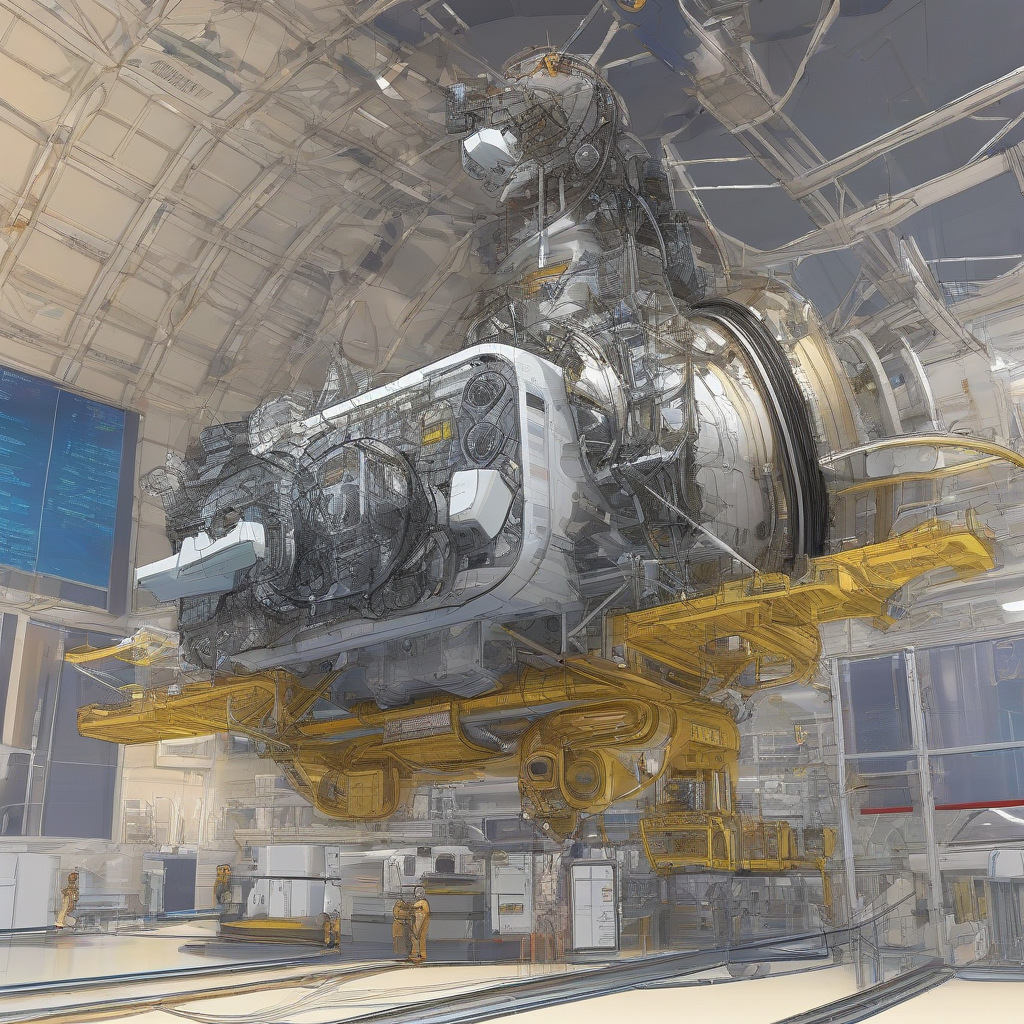
25 Years in Orbit: Science, Innovation, and the Future of Exploration
A Quarter Century in Orbit: The International Space Station's Legacy and Future
As the International Space Station (ISS) marks its 25th year in orbit, it's a testament to human ingenuity and collaboration. Since November 2000, the ISS has been continuously occupied by humans, with over 290 people from 26 countries visiting the orbiting laboratory. This extraordinary endeavor has enabled groundbreaking research, technological advancements, and a growing commercial market in low Earth orbit.
Unlocking Discoveries in Microgravity
The ISS's unique microgravity environment has unlocked discoveries that benefit life on Earth and prepare humans for deep space missions. NASA's Human Research Program (HRP) works to understand the changes astronauts face aboard the orbital outpost and to develop interventions to keep crews healthy before, during, and after flight. Astronauts exercise for roughly two hours a day to protect bone density, muscle strength, and the cardiovascular system, but the longer they are in microgravity, the harder it can be for the brain and body to readapt to gravity's pull.
The Challenges of Long-Duration Spaceflight
After months in orbit, returning astronauts often describe Earth as heavy, loud, and strangely still. Some reacclimate within days, while other astronauts take longer to fully recover. Through HRP-led studies, scientists track these changes and test solutions—from improved exercise regimens to medical monitoring and nutritional strategies. The results inspire new medical technologies, while teaching scientists how the human body adapts to long-duration spaceflights—knowledge that helps keep astronauts healthy on future missions.
Sharpening Skills and Technologies for Deep Space
The ISS continues to be a critical platform for sharpening skills, technology, and understanding that will prepare humanity to return to the Moon with NASA's Artemis campaign and journey on to Mars and beyond. Since space presents an entirely new physical environment with a distinct set of challenges, the orbiting laboratory is uniquely positioned to support research and preparations not possible on Earth. This includes mastering techniques for basic tasks like drinking water, sleeping, exercising, and handling various materials.
Developing Solutions for Microgravity-Induced Changes
The ISS is also a proving ground for developing solutions to microgravity-induced changes to and challenges for the human body. This includes testing reliable technologies and self-sustaining ecosystems necessary for deep space travel, from life support systems to in-orbit agriculture and 3D printing of materials. Refining techniques and procedures for data and imagery collection and analysis is another critical area of research.
A Decade of Results
With nearly 25 years of experiments conducted aboard the station, more breakthroughs are materializing than ever before. These scientific discoveries and technological advancements are benefiting humanity on the ground, contributing to the growing low Earth orbit economy, and helping to prepare for future exploration of the Moon and Mars. Innovations include advances in X-ray technologies, developed to create a space station telescope, which are helping unravel the mysteries of our universe while improving medical devices on Earth.
Real-World Applications
The space station's benefits extend far beyond the scientific community. Temperature-change data has been employed in efforts to reduce heat absorbed by city surfaces, reduce fire risk, and help farmers efficiently water their fields. Demonstrations of robotic technologies with the potential to relieve repetitive movement and other workplace-related stressors are also being developed. A small ultrasound unit for crew health monitoring has since been adapted to provide diagnostic care in remote areas on Earth.
Forward-Looking Thoughts
As the ISS continues to play a vital role in our journey to the Moon and beyond, it's essential to recognize the significance of this extraordinary endeavor. The space station's legacy will be remembered for generations to come, and its impact will be felt long after it's decommissioned. As we look to the future, it's clear that the ISS will remain a critical component of our space exploration efforts, driving innovation, and pushing the boundaries of human knowledge.
Conclusion
The International Space Station's 25-year journey in orbit is a testament to human ingenuity, collaboration, and determination. As we celebrate this remarkable achievement, we're reminded of the incredible progress that's been made and the many breakthroughs that are yet to come. The ISS will continue to play a vital role in our journey to the Moon and beyond, driving innovation, and pushing the boundaries of human knowledge.